
Brand ambassador program design follows a predictable template. Recruit creators or customers who love the brand. Give each one a unique discount code and a referral link. Pay a commission on every sale attributed to that code or link. Measure success by revenue generated per ambassador. It is a clean model on paper, and it works well enough when every member of the ambassador’s audience is on a phone or laptop with a direct path to checkout.
The problem is that a growing share of the audience is not in that position. More than half of YouTube viewing now happens on television screens. An ambassador who creates video content has a large and growing portion of their audience watching from a sofa, where they cannot click a referral link and are unlikely to remember a discount code long enough to use it later. That ambassador’s contribution to the program looks weak in the dashboard even though the interest they generated was real. Over time, the program shifts its investment toward ambassadors whose audiences skew mobile, not because those ambassadors are better but because the attribution model can see their results. The brand ends up optimising for measurability rather than actual impact. That distortion flows directly into the influencer marketing ROI calculation, because the formula only counts what the attribution model can see, and on TV, it can see almost nothing.
Why Discount Codes and Referral Links Are Not Enough
Discount codes and referral links have been the backbone of brand ambassador programs for a decade. They are simple to set up, easy to explain, and produce clean attribution data. But they share a structural weakness: they only work when the audience acts immediately on the device where the content is being consumed. A discount code shown during a video works if the viewer pauses, opens a browser, navigates to the store, and enters the code at checkout. On a phone, that is a thirty-second process. On a TV, it requires switching devices entirely, which most lean-back viewers will not do. The code might stick in their memory for a few minutes, but by the time they next think about the brand, the code is gone. Even when codes do get used, a significant share are redeemed via coupon aggregator sites rather than from the ambassador’s content, which corrupts the attribution data and credits the wrong source for the sale. Referral links have the same blind spot. They require a click, and clicks do not exist on televisions. An ambassador’s referral link in a video description is invisible to every viewer watching on a TV. The attribution challenge that connected TV creates for brands is not limited to paid advertising. It affects every brand ambassador program that depends on links and codes as its primary measurement tools.What a Brand Ambassador Program Actually Needs to Measure
The purpose of a brand ambassador program is not to generate discount code redemptions. It is to turn the ambassador’s audience into the brand’s audience. Discount codes and referral links are proxies for that goal, not the goal itself. When those proxies break because the viewing environment has changed, the program needs a different measurement layer. The metric that matters most in a brand ambassador program is owned audience growth per ambassador. How many people in the ambassador’s audience took an action that gave the brand a direct, reusable connection to them? Not a one-time sale that ends the relationship until the next campaign, but an ongoing connection the brand can activate repeatedly. That is a fundamentally different influencer marketing KPI than revenue per discount code, and it changes how the program evaluates which ambassadors are actually driving long-term value. An ambassador who generates five hundred wallet pass adds and zero immediate sales is more valuable over a twelve-month period than an ambassador who generates fifty discount code sales and nothing else. The first ambassador built an audience the brand can notify, re-engage, and convert over time at no additional cost. The second generated a spike that ended the moment the content stopped circulating.How Wallet Passes Change the Economics of Ambassador Programs
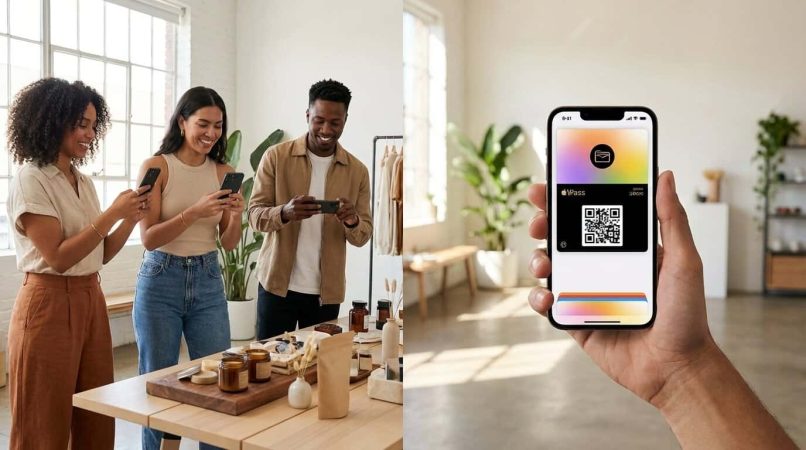
A wallet pass replaces the discount code as the ambassador’s primary call to action. Instead of “use my code BRAND20 at checkout,” the ambassador says “scan the code and add the VIP pass to your phone.” The viewer scans a QR code or taps a link, and a branded wallet pass is added to their Apple or Google Wallet in one tap. No purchase required. No form. No app to download. That single change fixes three problems at once. First, it works on every screen. A viewer watching the ambassador’s content on a TV can scan the QR code from their sofa. The action takes five seconds and does not require leaving what they are watching. The scan rates that brands achieve with wallet pass QR codes are consistently three to five times higher than traditional purchase-intent codes because the ask is softer and the friction is lower. Second, it captures the entire interested audience, not just the fraction who are ready to buy right now. Every viewer who adds the pass is now reachable through lock screen notifications. The brand can send a product launch notification next week, a seasonal promotion next month, and a flash sale next quarter. Each of those notifications costs nothing to send and is attributed back to the ambassador who originally drove the wallet pass add. Third, it makes every ambassador’s contribution measurable regardless of viewing environment. The brand can see exactly how many wallet pass adds each ambassador drove, how those pass holders responded to subsequent notifications, and how many of those responses converted to sales. That is closed-loop attribution from ambassador content to revenue, and it works whether the audience watched on a phone, a laptop, or a television. The best practices for running influencer campaigns in 2026 all point in this direction: capture first, convert later, measure everything.Structuring a Wallet Pass Ambassador Program
The mechanics of running a wallet pass ambassador program are straightforward. The brand creates a branded wallet pass using the PushPass platform. Each ambassador receives a unique QR code and link that identifies them. When a viewer adds the pass through that ambassador’s code, the add is attributed to that ambassador in the dashboard. Commission structures can work the same way as traditional programs but with richer data. Instead of paying commission only on immediate sales tracked by a discount code, the brand can pay on wallet pass adds (rewarding audience growth), on notification-driven sales (rewarding long-tail conversion), or on a blended model that values both. The ambassador who builds the largest, most engaged pass holder base is the one generating the most long-term value, and the data makes that visible for the first time. For ambassadors, the pitch is simple: you are no longer asking your audience to buy something. You are offering them something for free that puts them closer to the brand. That is an easier sell for the ambassador and a better experience for the audience. The ambassador’s credibility is preserved because the CTA is generous rather than transactional. And because every pass holder can share their pass with friends through a built-in QR code, the ambassador’s audience grows the brand’s owned audience virally, with every share attributed back through the chain.Why This Matters More for Small and Mid-Size Brands
Enterprise brands can afford ambassador programs that leak value because they run enough volume to compensate. A small business investing in influencer marketing cannot. If a small brand recruits ten ambassadors and measures their performance purely on discount code sales, it will almost certainly conclude that ambassador marketing does not work, because the majority of the value those ambassadors generated (interest, intent, future demand) was invisible to the measurement system. Wallet passes make that invisible value visible. A small brand running a ten-person ambassador program can see that Ambassador A drove 300 wallet pass adds and Ambassador B drove 40. Even if neither generated immediate sales, the brand now knows where its audience is growing and can activate those 300 pass holders through notifications whenever it is ready. That transforms ambassador marketing from a gamble into an infrastructure investment that compounds with every campaign. PushPass pricing starts at $89.99 per month, which means the entire wallet pass infrastructure costs less than what most brands pay a single ambassador. The economics work at every scale.The Ambassador Program That Compounds Instead of Expiring
The fundamental flaw in most brand ambassador programs is that each campaign cycle starts from zero. The ambassador posts, some sales happen, the campaign ends, and the audience that was reached is gone. The next cycle requires paying for reach all over again. Nothing accumulates. A wallet pass ambassador program reverses that pattern. Every campaign cycle adds to a growing base of pass holders the brand owns directly. The second cycle builds on the first. The third builds on the second. The brand’s owned audience grows with every piece of content every ambassador creates, and the cost of reaching that audience through notifications is zero regardless of how large it becomes. That compounding dynamic only becomes visible when influencer marketing measurement tracks the full chain from each ambassador’s content through to the revenue their pass holders generate months after the original campaign ended. That is the difference between renting attention and building an asset. The brands that make this shift in 2026 will have a compounding advantage over every competitor still running discount code programs and wondering why the numbers do not add up.A 15-minute call. Your brand on your lock screen before it ends.