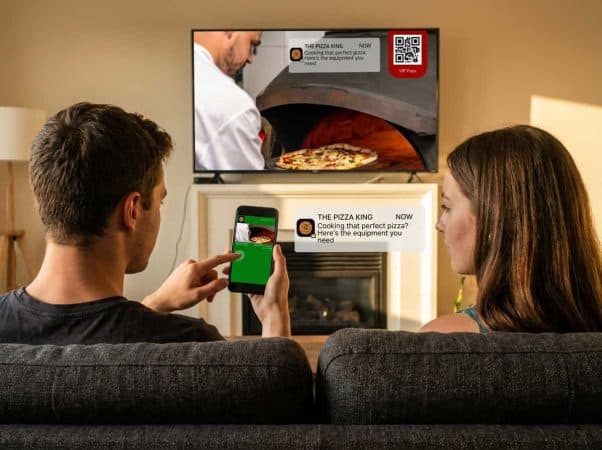
QR code advertising has become the default way to make television and video viewers take action, but most campaigns are using QR codes in a way that guarantees they underperform. The issue is not the QR code itself, the placement, or the size on screen. It is that the action behind the scan assumes the viewer is ready to buy, and on a TV they almost never are. When the QR code leads to a wallet pass instead of a purchase page, scan rates jump from low single digits to 10 to 15 percent, and the brand captures an audience it can convert on its own timeline.
QR code advertising is now standard in television commercials, connected TV campaigns, streaming platform placements, and creator-led video content. Brands are spending significant money to get QR codes on screen because they are the only realistic interaction available when the viewer is watching on a television. Links cannot be clicked. Discount codes require too much effort. The QR code is the bridge between the screen and the viewer’s phone, and every advertiser knows it.
The problem is what happens after the scan. In most QR code advertising campaigns, the scan takes the viewer to a product page, a checkout flow, or a landing page that asks for an email address. That is the right destination if the viewer is sitting at a desk in buying mode. It is the wrong destination if the viewer is watching from their sofa in a lean-back state, which is exactly where the majority of TV and connected TV viewers are. The viewer scans out of curiosity, lands on a page that demands a decision, and closes it. The campaign report shows a low scan rate and almost no conversions. The brand concludes that QR code advertising does not work. In reality, the QR code worked. The destination did not.
Why QR Code Advertising Underperforms on Television
Television viewing is fundamentally different from web browsing. A viewer watching a connected TV ad or a creator’s video on a large screen is relaxed, passive, and consuming content. They are not in a decision-making state. They are not comparing products. They are not ready to enter payment details. Any QR code advertising strategy that assumes otherwise will underperform, regardless of how well the creative is executed.
The standard advice for improving QR code advertising focuses on execution: make the code bigger, keep it on screen longer, add a clear call to action, use a branded frame. Those optimisations matter at the margins, but they do not address the fundamental mismatch. A perfectly sized, perfectly placed, perfectly branded QR code that sends the viewer to a checkout page will still underperform because the destination does not match the moment. The reasons QR codes underperform on TV are structural, not creative.
More than half of YouTube viewing now happens on television screens. That means any brand running QR code advertising through creator content or pre-roll ads on YouTube is showing codes to an audience that is primarily in lean-back mode. The CTV attribution challenge this creates is significant: the campaign generates genuine interest, but the measurement system only counts purchases, and purchases do not happen during lean-back viewing.
The Scan Is Not the Sale. It Is the Relationship.
The single biggest mistake in QR code advertising is treating the scan as a conversion event. On a phone or laptop, a click and a purchase can happen in the same session. On a TV, they are separate stages. The scan is a signal of interest. The purchase happens later, on a different device, in a different mindset. When those two moments are collapsed into a single interaction, performance collapses with them.
A viewer who scans a QR code during a TV ad is telling the brand “I noticed you and I am willing to do something about it.” That is a valuable signal. Sending that viewer to a checkout page is like responding to someone raising their hand by asking them to sign a contract. The response is disproportionate to the intent, and the viewer withdraws.
When the scan leads to a wallet pass instead of a purchase page, the dynamic changes completely. The viewer scans, one tap adds a branded pass to their Apple or Google Wallet, and the interaction is complete in under five seconds. No purchase required. No form. No email address. The brand has captured the relationship without demanding the sale. That viewer is now reachable through lock screen notifications, and the brand can convert on its own timeline when the viewer is actually ready to buy.
What Happens to Scan Rates When You Change the Destination
The data on this shift is consistent. QR codes that lead to purchase pages or landing pages with forms produce scan rates of 2 to 3 percent in TV and video environments. QR codes that lead to a wallet pass with a soft call to action produce scan rates of 10 to 15 percent in the same environments with the same audiences. That is a three to five times improvement from changing the destination, not the creative.
The reason is straightforward. A wallet pass ask is proportionate to the moment. “Scan the code and add the VIP pass to your phone” is something a viewer can do while watching. It takes two seconds. It costs them nothing. It feels like gaining access to something rather than being sold something. The psychological barrier is almost zero, which is why the scan rate is so much higher.
A purchase ask is disproportionate to the moment. “Scan the code and buy now” requires the viewer to stop watching, evaluate the product, make a financial decision, and complete a transaction. That is five minutes of effort in a moment where the viewer wanted to do something that took five seconds. Most will not make that jump, and the campaign loses them.
How Wallet Passes Turn QR Code Advertising Into a Measurable Channel
The value of a wallet pass in QR code advertising goes beyond higher scan rates. It creates a measurement chain that traditional QR code campaigns cannot match.
In a traditional QR code advertising campaign, the brand knows how many people scanned and how many people purchased during the session. Everyone who scanned but did not purchase is lost. There is no way to contact them again without paying for another ad. The campaign produced a one-time result and the audience disappeared.
In a wallet pass QR code advertising campaign, the brand knows how many people scanned and added the pass from each specific ad placement, each creative, and each time slot. Every one of those pass holders is now reachable through lock screen notifications at no additional cost. When the brand sends a notification a week later about a product launch, it can track who opened it, who clicked, and who purchased. That entire chain, from the original QR code scan during the TV ad through to the sale that happened ten days later on a different device, is attributed back to the specific campaign that drove the wallet pass add.
For brands running QR code advertising across multiple channels, lock screen notification platforms provide a single dashboard showing wallet pass adds by campaign, notification performance, and click-to-sale conversion. PushPass can do all of this.
The brand can compare the performance of a QR code shown during a connected TV ad versus one shown during a creator’s video versus one printed on packaging, all within the same measurement framework.
QR Code Advertising Across Different Channels
Connected TV Ads
QR codes in CTV ads reach viewers in their most lean-back state. Purchase-intent CTAs consistently underperform here. Wallet pass CTAs consistently outperform because the ask matches the moment. The attribution data from wallet pass adds gives media buyers deterministic proof that the TV spend drove downstream revenue, which is the data they need to defend CTV budgets at renewal.
Creator and Influencer Video Content
Creators showing QR codes during sponsored content face the same TV viewing challenge. More than half of their YouTube audience is watching on a television. A wallet pass CTA gives the creator something generous to offer rather than a hard sell, which preserves their credibility with the audience. The brand gets a measurable wallet pass add attributed to that specific creator. For brands running these campaigns as a brand ambassador program, the wallet pass adds compound across every piece of content every ambassador creates.
Print, Packaging, and Out-of-Home
QR codes on physical materials face a different version of the same problem. The viewer is standing in a shop, walking past a poster, or holding a product. They are not in buying mode either. A wallet pass CTA on packaging (“scan to join our VIP club”) captures the customer for later re-engagement at zero cost. Every scan is tracked, every notification is measurable, and the brand builds an owned audience from every physical touchpoint.
What to Do With Your Current QR Code Advertising
If you are already running QR code advertising, the change required is not a creative overhaul. It is a destination change. Keep the QR code where it is. Keep the placement, the size, and the screen time. Change what the code links to. Instead of a product page or landing page, link it to a wallet pass. Change the CTA from “scan to buy” or “scan to learn more” to “scan and add the VIP pass to your phone.”
The creative stays the same. The QR code stays the same. The audience stays the same. The only thing that changes is the action you are asking for, and that single change is what moves scan rates from 2 to 3 percent to 10 to 15 percent. For small businesses running influencer campaigns with QR codes, this shift is particularly impactful because every additional viewer captured through a wallet pass is a viewer the business can re-engage without paying for another campaign.
The infrastructure that turns QR code advertising from a one-shot tactic into a compounding audience channel costs less than most brands spend on a single ad placement. We will show you what your QR code advertising performance would look like with a wallet pass destination instead of a purchase page.
A 15-minute call. Your brand on your lock screen before it ends.