QR codes are now a standard part of YouTube creator campaigns and, of course, TV advertising in general. They appear in brand integrations, sponsorship reads, and even high-budget commercials. On the surface, this makes sense. When links cannot be clicked, QR codes feel like the obvious replacement.
And yet, scan rates are often lower than expected, conversions are inconsistent, and attribution becomes almost impossible to track. Push notification software is a solution that can help with all of these issues.
This has led many teams to assume QR codes are ineffective. In reality, the issue is not the technology itself. QR codes work. Adoption is high. Trust is largely there. The problem is that QR codes are often being used in ways that don’t match how people are actually watching YouTube and TV.
When that mismatch exists, performance suffers. When it is corrected, performance improves dramatically. The same mismatch shows up across every channel where QR code advertising is used, from CTV commercials to out-of-home placements, because the underlying problem is always the destination, not the code itself.
YouTube Is No Longer Primarily a Website
One of the biggest shifts in recent years is how YouTube is consumed. More than half of YouTube viewing now happens on connected TVs. For many creators, especially those producing longer-form content, the TV is the dominant screen.
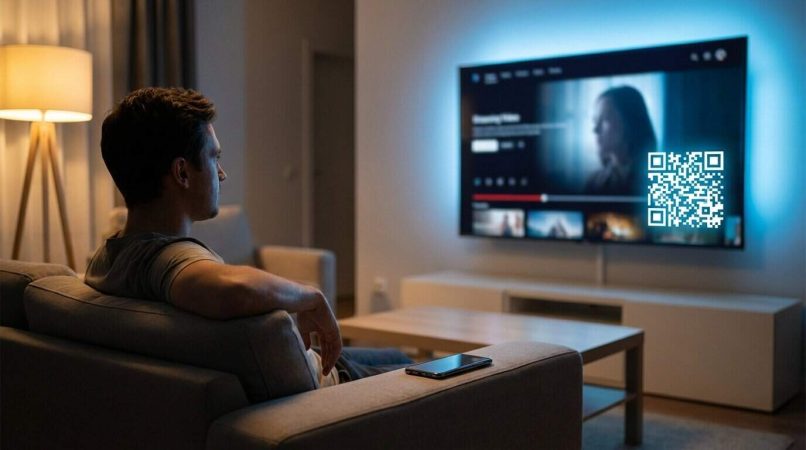
This matters because TV is not an interactive environment in the same way mobile or desktop is. There is no natural click. The viewer is usually relaxed, sitting back, often watching with other people, and not actively browsing.
On mobile or desktop, a link in the description works because the viewer is already in a lean-in mode. They are holding the device, scrolling, tapping, and switching between apps. On TV, none of that applies. Even accessing the description is awkward, and clicking links is often impossible.
QR codes exist because of this shift. They are the only realistic interaction available to TV viewers. But simply replacing a link with a QR code does not automatically solve the problem. The YouTube TV viewing moment is very different, so the action needs to match the moment.
QR Codes Are Being Treated Like Clickable Links
Most QR codes shown in YouTube and TV campaigns lead directly to a website, product page, or checkout flow. This assumes the viewer is ready to act immediately to purchase something or give their data.
When someone scans a QR code while watching YouTube on their TV, the action is often driven by curiosity rather than intent. They want to remember something, explore later, or understand what is being offered. They are not necessarily ready to make a decision or complete a task at that moment. They’re in laid-back mode.
When the scan leads straight to a purchase-focused page, the mismatch becomes obvious. The page loads, the task feels too much, and the viewer disengages and closes their browser. No purchase happens, and no meaningful engagement is captured.
The QR code didn’t work well. In reality, interest existed, but the action being asked for didn’t fit the viewing moment.
When QR codes are repositioned as wallet pass entry points rather than purchase funnels, they stop underperforming and start generating measurable data. How that data feeds into a complete attribution chain from TV to sale is explained in our CTV attribution guide.
Response and Conversion Are Not the Same on TV
One of the most common mistakes in QR-based campaigns is treating response and conversion as the same thing.
On mobile or desktop, they often are. A click and a purchase can happen on the same device, in the same session. On TV, they are separate stages.
Scanning a QR code on a TV screen is a response. It signals interest. A purchase is a conversion. That usually happens later, on a different device, and in a different mindset.
When these two moments are collapsed into a single interaction, performance suffers. Scan-to-buy assumes that interest and intent exist at the same time. On TV, they usually do not.
This also explains why attribution becomes so difficult. A viewer might scan a QR code, decide not to act, and later search for the brand on their phone or laptop. The conversion still happens, but it is disconnected from the original exposure. From the data, it appears as if the influencer or TV placement had little impact, even when it clearly did.
Why Scan-to-Buy Underperforms on YouTube and TV
Scan-to-buy asks for too much, too early, and does so when the viewer is not thinking about buying things, they’re generally relaxing on the sofa, or doing other things while listening or watching.
TV viewing is a lean-back experience. People notice brands, remember creators, and register offers, but they are not in buying mode. Asking them to pull out a phone, scan a code, and complete a purchase introduces friction that doesn’t fit the moment.
Even when a QR code is scanned, the action is often exploratory. The viewer lands on a page, realizes they are being asked to buy something, and disengages. Interest collapses because the decision is being forced at the wrong time.
This does not mean the audience is disengaged. It means the call to action does not fit how TV is watched.
Until that timing issue is addressed, QR code performance on YouTube TV will continue to look weaker than it actually is.
What Actually Improves QR Code Performance
Improving QR code performance on YouTube and TV is not primarily about creative tweaks. Size, placement, and time on screen matter, but they are not the root issue.
The real improvement comes from changing what happens after the scan.
A QR code that works in a TV environment needs to support a “save now, act later” behavior. It should allow the viewer to register interest without forcing a decision in the moment. The action needs to be light, clear, and frictionless.
Most importantly, the connection needs to persist beyond the view. A one-off website visit rarely captures a sale or a sign-up. The interest exists of course but if nothing happens after that the potential custmer is lost or has to find you through other means. Initial attribution is lost either way.
When the scan creates a persistent connection that lives on the viewer’s phone, things change. The viewer can act later, when intent exists, and action is easier. Conversion becomes a follow-on event rather than a forced immediate outcome.
This is when scan-through rates improve, and attribution becomes defensible. Not because the QR code suddenly works better, but because it is finally doing the right job for the environment it appears in.
From QR Codes to a Conversion That Fits YouTube and TV Viewing
The core issue with underperforming QR codes on YouTube and TV is not visibility. It is aligned with how the viewer is, well, viewing.
TV has become a performance channel, but the conversion layer still works better on the web. Until those two things are brought into sync, campaigns will continue to leak value.
Fixing this means treating QR codes as infrastructure, not shortcuts. Their role is to capture interest during viewing and allow conversion to happen later, on the viewer’s terms.
Brands and creators who adapt here stop trying to make TV behave like a website. Instead, they build conversion paths that reflect how TV is actually watched.
This is where purpose-built solutions for YouTube and TV viewing come into play. Not as a creative change, but as a structural one.
This shift is already being applied in YouTube creator campaigns where QR codes are used to capture interest first and convert later, rather than pushing viewers straight to a website.
A 15-minute call. Your brand on your lock screen before it ends.