
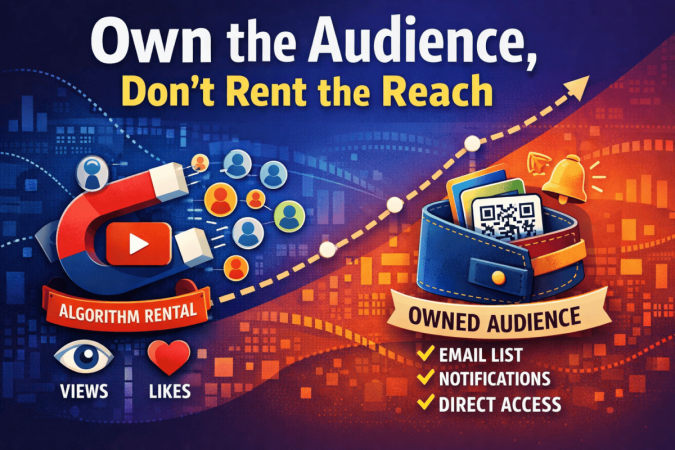
Views have always been the headline metric in the creator economy.
They are easy to understand, easy to report, and easy to sell. For years, views were a reasonable proxy for reach, influence, and value. That relationship breaks down once a large chunk of those views move to TVs.
As platforms mature and distribution becomes more fragmented, views and clicks don’t accurately tell you what a campaign actually achieved. This is especially true in TV-first environments, where audiences can see content but can’t act on traditional calls to action.
This gap between exposure and action is the same reason most QR codes struggle to achieve high scan-through rates when they ask for too much at the point of interaction.
For creator agencies, that creates a growing gap between what looks good in a report and what actually creates long-term value.
The future of agency value lies in owned audience, not rented attention.
When YouTube Moves to TV, Engagement Has to Move Too
Views still matter. Clicks still matter too. They’re just no longer telling the full story.
On mobile and desktop, clicks have traditionally been the way that attention turned into measurable engagement. Links in descriptions and pinned comments allowed agencies and brands to move viewers to a trackable location.
When viewers are watching YouTube or any other channel on their TV, things change. There is no link in the description to click. The QR code becomes the only way to connect with a viewer.
What’s important here is the action taken by somebody on their computer or mobile device compared to scanning a QR code from a secondary device is very different. The call to action of a sale when the viewer is in a laid-back environment is less likely to happen.
When QR codes are treated as a conversion to a sale, they’re less likely to happen than a low-friction action of taking up an offer.
This same pressure-versus-performance relationship shows up across QR code usage more generally, which is why soft QR code calls to action consistently outperform purchase-led asks.
When that engagement action becomes frictionless, more viewers will take action, and the ongoing value of a campaign will increase.
Why Renting Reach Is Becoming Riskier
Rented reach depends entirely on platform behavior, which is forcing a rethink of how influencer campaigns are designed for TV audiences.
None of this is under the agencies or brands’ control, of course, so an owned audience can really benefit a brand.
When reach is the primary output, agencies are exposed to volatility they can’t influence.
This is why sponsors are asking harder questions about attribution for YouTube and other video campaigns, especially as more viewing shifts to TVs.
Views and clicks don’t fully capture the audience, so getting the most accurate forecast and statistics can greatly influence the longer term relationship with the client be that a brand sponsor or the creator themselves.
Owned Audience Changes the Agency Value Proposition
In practice, owned audiences start with how people are first invited in, which is increasingly happening via QR codes, at least when the viewer is watching on their TV.
When an agency helps a creator or brand capture their audience directly, that audience becomes a reusable asset.
This shifts the agency conversation away from one off campaigns and toward long term value creation.
Instead of simply selling exposure, agencies can sell access directly to the audience.
Instead of reporting impressions, they report growth. That’s a much stronger position for a brand or creator to be in.
Why Owned Audience Works for Brands
Brands do not struggle to buy reach. Brands struggle to build relationships.
When an influencer campaign ends, brands want to know whether they gained anything lasting. They want to know if interest was captured or if attention was simply rented for a few days. Attribution can be leaky unless TV viewing is taken seriously.
An owned audience allows for this. It allows brands to continue the relationship beyond the initial content. It turns influencer marketing from a burst activity into an ongoing channel.
For brands investing heavily in creator partnerships, this is the difference between spend and investment. And it’s key in the short-term and long-term to maintain a healthy lifetime customer value.
The Role of Creators in Owned Audience Models
Creators already understand this shift, even if the tools have not always caught up.
Creators know audiences follow them for trust and connection, not constant selling. They also know that pushing aggressive calls to action can damage that relationship.
But what if asking an influencer to communicate with their viewers to join, opt in, or receive future value without disrupting the content? The relationship grows naturally instead of being forced. Creators aren’t often natural salespeople, so this helps them and preserves trust while creating long-term value for everyone involved.
Why Agencies Are Best Placed to Lead This Shift
Agencies sit at the intersection of creators, brands, and platforms.
They already manage strategy, execution, and reporting. Adding owned audience capture into that mix is a natural extension of their role, and agencies that do this well gain a clear advantage over those that don’t.
They can standardize audience capture across creators.
They can report durable value to sponsors.
They can reduce dependency on platform volatility.
More importantly, they stop just executing campaigns and start building something for a brand or influencer that is lasting.
How PushPass Enables Owned Audience at Scale
Owned audience only becomes valuable when it can be accessed and activated without relying on platforms. The real wallet pass benefits for agencies come from turning campaign exposure into a persistent audience that can be reached again without paying for the same impressions twice. PushPass, our push notification software, enables owned audiences at scale.
It allows agencies, brands, and creators to capture audience through simple actions that don’t disrupt the content. There are no app downloads, no complex onboarding and no friction.
Audiences who scan a QR code or click a link instantly get a branded pass added to their digital wallets, creating a persistent channel that can be used long after a campaign ends.
From an agency perspective, this makes owned audience measurable and scalable.
From a brand perspective, it creates continuity.
From a creator perspective, it respects the audience relationship.
From Views to Value
Views will always matter. They are not going away, but views alone are no longer enough.
As the creator economy matures, the agencies that win will be the ones that help brands and creators build assets, not just numbers.
Owned audience compounds but views slow down.
This principle applies at every scale, and the businesses that benefit most are often the ones with the least room for waste. Even small businesses running their first influencer campaign see better results when they capture an owned audience rather than relying entirely on immediate conversions from a single piece of content.
The creator economy is moving fast, and agencies that get audience retention right early end up with a real advantage. Agencies that continue to sell views and clicks alone will struggle to differentiate. Agencies that help build owned audiences will define the next phase of influencer marketing.
PushPass makes this shift possible without breaking content, trust, or workflow.
The question is no longer whether owned audience matters. It’s who builds first.
A 15-minute call. Your brand on your lock screen before it ends.


