
Most YouTube QR codes underperform because they’re used as purchase tools in moments when purchase intent is hard to act on, or when a sales intent is too strong for the moment.
In QR code marketing, hard selling gets very few scans, as it’s often not the right moment to sell when viewers are in “laid-back” mode.
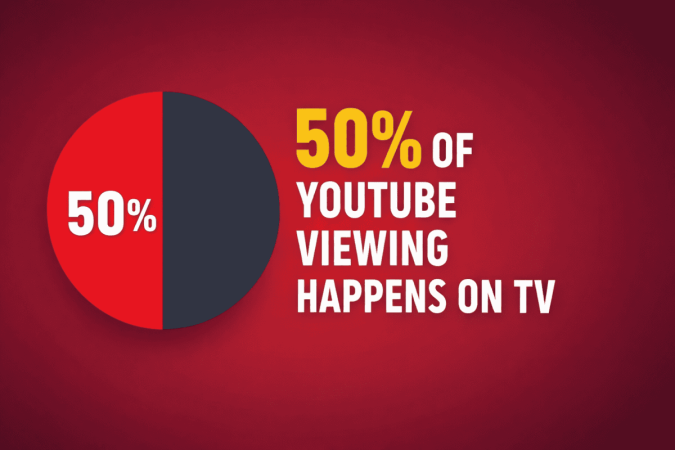
The same YouTube QR codes, when paired with low-friction CTAs (calls to action), capture far more people, with much higher QR code scan rates, because they fit how more than half of YouTube viewing actually happens, on the TV.
The issue isn’t the QR code. It’s how and when it is being scanned and its intent. This is why QR codes underperform on YouTube and TV when used as purchase triggers rather than low-friction entry points.
The Hidden Performance Gap in YouTube QR Code CTAs
Most people know how to scan QR codes and are happy to scan them, but only if the call-to-action isn’t too strong. A sale intention, for example, may well be too strong. The intent to join a loyalty program with no immediate need to purchase often yields much higher scan-through rates.
What changes performance is what the scan asks for and the performance gap can be huge
When QR code scans lead to a low-commitment action, such as access, membership, or future value, scan rates rise sharply. When they lead directly to a transaction, scan rates fall away.
That same mismatch between purchase pressure and intent is why most QR codes stall at low scan-through rates across TV advertising and every other video channel, not just YouTube.

YouTube Has Become a TV Channel, Not a Clickable Interface
Now more than half of YouTube viewing happens on TVs, something YouTube’s CEO has publicly confirmed.
A growing share of views now happen on TVs, where the audience is watching rather than browsing. That changes what people can realistically do in the moment and what they want to do in that moment. They can’t click links in the description, or move smoothly into a purchase flow without breaking the viewing experience by using the second device.
This matters because many YouTube QR code CTAs are still designed as if the viewer is on their phone or desktop. When the environment changes but the call to action doesn’t, the action doesn’t match the moment. The issue is not reach or awareness. It’s a mismatch between how the content is consumed and what the QR code is asking the viewer to do.
Once you accept that YouTube often behaves like TV, it becomes clear why traditional, purchase-led QR codes struggle.
Why This Creates a Real KPI Problem for Sponsors and Agencies
For sponsors and agencies, this shift creates a reporting problem that is easy to misread.
Views and watch time can look healthy, but traffic and conversions no longer scale in the same way. That does not mean the campaign failed. It means a significant portion of the audience had no practical way to act at the time of viewing.
When QR codes are used as direct purchase tools, scan rates stay low and attribution looks weak. From the outside, this appears as underperformance. In reality, it is a measurement gap caused by forcing high-intent actions into low-intent moments.
Until the call to action changes, KPIs will continue to underrepresent the real value being generated by YouTube campaigns and other TV advertising.
Why the Call to Action Has to Change
If a large share of the YouTube audience is watching on a TV and click-based CTAs are unavailable, campaign performance will continue to suffer unless the call to action itself changes.
You can’t force TV viewers into mobile behavior, which is why influencer campaign design has to change for TV viewing.
The call to action has to match what TV viewers, on YouTube or any other channel, are realistically willing to do in that moment.
Onboarding a fan into your ecosystem via a QR code while they’re watching on their TV is a low-intent moment, which is why low-friction QR code calls to action outperform purchase-led asks.
Direct Purchase Actions Shouldn’t Be The CTA.
What TV QR Code Viewers Will Say Yes
Tone down the sale and offer one-tap onboarding to a loyalty card that later sends notifications and lets viewers earn rewards for their actions. That is something TV viewers are willing to scan. For brands this means an instant connection with the viewer and one that’s lasting.
These asks do not interrupt the viewing experience.
This is not about avoiding sales. It’s about guiding followers through the funnel from the top to the bottom, rather than asking for an immediate purchase.
This shift toward low-ask actions is the foundation for rewarding engagement without forcing purchases in all QR-based interactions.
From Scan to Connection, Instead of Scan to Sale
Why digital loyalty cards change this dynamic
When a viewer scans a YouTube QR code and adds a brand or creator card to their digital wallet, a connection is made. This connection allows push notification marketing as well as a branded pass that sits in Google and Apple wallets.
No app download. No account creation. No onboarding friction.
The brand or creator gains a lasting connection with a customer and, crucially, potentially a future customer. That is fundamentally different from selling someone a checkout page they are not ready for quite yet.
Selling Later When Intent Exists
Once a relationship exists, sales become easier to achieve, and offers can be delivered when you want. Communication can be paced. Rewards can be tied to actions, rather than simply purchases.
Digital cardholders can virally share their pass and be rewarded for it.
Sales don’t disappear. They move to moments where the loyalty card holder is more likely to buy.
Why This Matters for Agencies, Brands, and Creators
For agencies and brands, this increases sales and brand exposure in prime real estate – in the cardholder’s digital wallet.
QR codes can help brands and creators capture their owned audience for campaigns.
For brands, this improves long-term return on spend.
For agencies, it creates more durable campaign value.
For creators, it removes pressure to sell in moments that feel unnatural to their content.
Why This Matters for Sponsors and Agencies
If a viewer can't click a link, attribution will always look weak.
That does not mean the campaign failed.
It means the audience was unable to act.
QR codes are the only practical way to reach TV viewers effectively.
How This Changes the Role of YouTube QR Codes
QR codes perform best when used as relationship starters rather than as checkout buttons. They can capture future customers, support loyalty through actions, and deliver offers when the timing is right.
QR codes are not the only way to onboard people into this model. Links work when the audience is watching on other devices and can feed into the same relationship. What matters is that the wallet becomes the hub and a lasting connection.
Why Wallets and Notifications Complete the Loop
QR codes solve the access problem for TV viewers, but they are only the first step.
Once interested fans click to scan the QR code, this opens up the whole world of notifications. You can push notifications when you want to various segmentations of your audience. You can measure their effectiveness, reach, and reward based on actions taken. These actions can be anything from watching a YouTube video to filling out the survey to visiting your website to listening to a podcast. In fact you can link any way you want.
Notifications Change Everything.
A wallet pass that can push notifications turns a one-time scan into an ongoing communication channel. Loyalty no longer depends on waiting for the next purchase or the next video – actions become the driver of loyalty and therefore sales.
Traditional loyalty cards and link-based funnels stop working once the viewer stops watching the video. With the right digital loyalty card platform, the relationship continues long after the first interaction.
This is why QR codes on YouTube and other video advertising channels work best when they are used to create a persistent, on device connection with your audience. This is what can be done with PushPass from FanCircles. It’s a platform that lets you send push notifications directly to your audience’s lock screen via Apple Wallet and Google Wallet. There’s no app required. Your audience adds a branded pass in one tap, and you own that relationship.
A 15-minute call. Your brand on your lock screen before it ends.


