
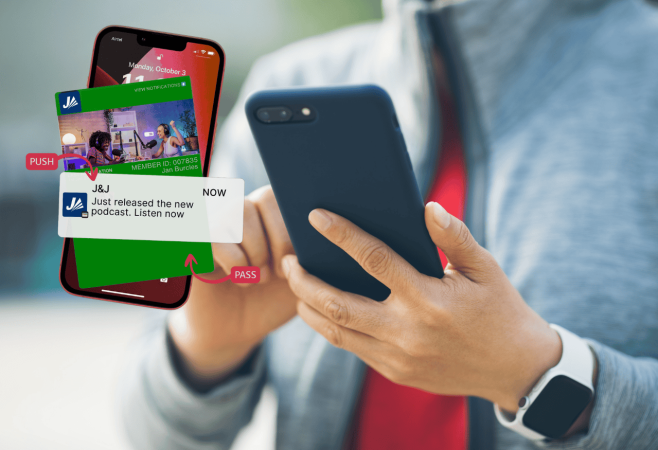
Digital loyalty cards are already part of everyday behavior.
People store them in Apple Wallet and Google Wallet, present them at checkout, and expect them to be there when needed. Loyalty cards themselves are familiar and trusted.
What has changed is not where loyalty cards live, but what they are now capable of doing. As outlined in how to create a digital loyalty card without building an app, modern loyalty cards can now be updated, engaged with, and measured over time.
This evolution has quietly turned digital loyalty cards from passive records of spend into an active channel for engagement.
When Digital Loyalty Cards Were Passive
Historically, digital loyalty cards served a narrow purpose.
A purchase was made, points were added, and eventually a reward was unlocked. Engagement was almost entirely transactional.
Between purchases, the relationship was silent. The loyalty card existed, but it didn’t actively participate in maintaining momentum with the audience. Take some of the loyalty cards that sit in your digital wallet.
Do they push notifications? More often than not, they don’t.
Flight tickets do.
Credit Cards do.
But loyalty cards haven’t evolved around sales rewards and that has been their key use case.
This model works for tracking spend, but it leaves big gaps where loyalty could be a communication tool and also reward on many other type of action.
Why Purchase-Only Loyalty Limited Engagement
Rewarding only purchases assumes that loyalty is expressed exclusively through spending.
In reality, customers often demonstrate loyalty in other ways. They visit frequently, interact with offers, respond to prompts, attend events, or return after periods of inactivity.
Traditional loyalty systems could not easily observe or reward these behaviors, so they were ignored.
The result was a loyalty program that recognized revenue, but not participation.
What Changed With Modern Digital Loyalty Cards
The role of the loyalty card changed when wallet passes became updateable and capable of supporting notifications.
Digital loyalty cards stored in Apple Wallet and Google Wallet could now:
- Be updated dynamically
- Surface timely calls to action
- Support notifications that prompt re-engagement
- Generate engagement signals through clicks, shares and sales
For a long time, loyalty cards lived alongside boarding passes, tickets, and payment cards without behaving the same way. People became used to their airline ticket or credit card sending notifications, while loyalty cards remained silent.
This created the impression that loyalty cards were informational by nature. In practice, it reflected how loyalty had traditionally been implemented, not a limitation of the wallet itself.
Once that constraint was removed, the loyalty card became something different.
Rewarding Actions as Well as Sales
Modern loyalty strategies recognize that valuable engagement happens outside the transaction.
Actions such as scanning a QR code, clicking a notification’s link, responding to a prompt, visiting a location, or returning after inactivity all indicate intent.
Digital loyalty cards can now acknowledge and reward these actions, creating more frequent and meaningful touchpoints without requiring constant purchasing.
Sales remain important, but they are no longer the only signal that defines loyalty.
How Calls to Action Changed the Role of the Loyalty Card
When a loyalty card can present calls to action, it stops being static.
Notifications draw attention. The loyalty card provides context. The action creates engagement.
This might include:
- Inviting a customer back after a period of inactivity
- Rewarding visits rather than purchases
- Highlighting time-sensitive updates or offers
- Encouraging participation in campaigns or events
The loyalty card becomes a lightweight but persistent engagement channel that sits naturally within existing behavior.
Why Engagement-Based Loyalty Works Without Adding Friction
Because digital loyalty cards already live in the wallet, no new habit is required.
Customers do not need to install an app, create an account immediately, or learn a new interface. The engagement layer builds on something familiar and trusted.
This allows organizations to increase interaction without increasing effort or disrupting checkout and campaign flows.
Why Engagement Depends on How Loyalty Is Introduced
Engagement-driven loyalty only works if people join in the first place.
As explored in why most digital loyalty programs fail at the point of signup, friction at checkout often prevents customers from ever entering the loyalty system.
When loyalty cards are introduced with low friction and full registration is deferred, they are more likely to be added to the wallet, kept, and engaged with over time.
How PushPass Enables Actionable Digital Loyalty Cards
PushPass wallet pass platform is designed around digital loyalty cards.
It allows brands to issue wallet-based loyalty cards that support notifications, calls to action, and engagement measurement.
The focus is growing your loyalty program from customers to prospective customers too. It adds to what you offer and works with your current loyalty setup.
Loyalty Cards as an Engagement Channel
Digital loyalty cards have long been part of everyday customer behavior. But digital loyalty cards for online retailers give a multitude of possibilities.
What has changed is their capability. They can now support calls to action, reward engagement as well as sales, and maintain momentum between transactions.
This evolution allows brands, retailers, and creators to build stronger relationships without changing how customers already behave.
A 15-minute call. Your brand on your lock screen before it ends.


