
Understanding YouTube Affiliate Marketing
YouTube affiliate marketing is a performance-based partnership that allows you to earn a commission by promoting a company’s products or services in your videos. You partner with a brand, receive an affiliate link, and place that link in your video’s description. When a viewer clicks that link and makes a purchase, you earn a percentage of the sale.
This creates a win-win-win scenario. Brands get their products in front of your audience, you open up a powerful new revenue stream beyond ad revenue, and your viewers get easy access to products recommended by a creator they trust.
Alex Hormozi’s YouTube channel, for example. With 3.3 million subscribers, they share business tips advice. In the review and tutorial videos, Alex can include affiliate links to the tools and products his viewers may be interested in. By authentically integrating these recommendations into high-value content, he can build a highly successful affiliate business without appearing spammy. Alex currently promotes, among other things Skool, which he has a stake in.

Best recurring revenue affiliate programs to join
These are some of the best recurring commission affiliate programs ideal for influencers and YouTubers with huge amounts of money to be earned. If promoted well.
Why You Should Use YouTube Affiliate Marketing
Research shows that 76% of consumers have bought a product after watching a video, making it an incredibly effective platform for affiliate sales. For creators, this opens a door to earning potential that can significantly outperform traditional YouTube ad revenue. While AdSense might earn you $3 to $5 per 1,000 views, a few affiliate sales from that same number of viewers can bring far more. Our YouTube revenue calculator shows what your own views are really worth.
The advantages of building your affiliate business on YouTube are compelling:
- Massive, Free Traffic: You can tap into your engaged audience without spending money on advertising.
- Repurpose Existing Content: If you already have an affiliate blog, you can easily repurpose your posts into video scripts, expanding your reach to a new audience.
- High SEO Value: YouTube videos frequently rank at the top of Google search results, giving your content a powerful visibility boost.
- Build a Loyal Audience: YouTube’s subscription feature helps you cultivate a dedicated community that is notified of every new video, building trust and consistent traffic over time.
- Attract Brand Partnerships: As you establish authority in your niche, brands may approach you for sponsored content and exclusive affiliate deals, opening up even more opportunities.
While it requires consistency and high-quality work, getting started is relatively easy. You don’t need a massive budget, just a camera, a microphone, and the dedication to create valuable content.
Micro Influencers On YouTube Use Affiliate Partners
For micro-influencers, partnering with Software as a Service (SaaS) companies is one of the most lucrative strategies available. These partnerships often feature high-ticket prices and recurring commissions, meaning the influencer earns a percentage of the sale, some paying every month the referred customer stays subscribed. This creates a powerful, compounding revenue stream that dwarfs one-off commissions from physical products.
Here’s how they effectively use high-paying SaaS affiliate partners:
1. It's Built on Demonstrating Value and ROI
The core of a successful SaaS promotion is trust and education. Since software can be a significant investment, the audience needs more than a casual recommendation. They need to understand the software’s Return on Investment (ROI). Micro-influencers excel at this by:
Being Subject Matter Experts: They are often power users of the software they promote, positioning them as credible experts who can speak to its true value.
Focusing on Solutions, Not Just Features: Instead of listing features, they demonstrate how the software solves a critical problem for their specific audience (e.g., “how this tool saved my business 10 hours a week”).
2. Their Content Strategy is a Masterclass in Education
Micro-influencers create high-value, educational content that walks the viewer through the software, effectively acting as a trusted pre-sales consultant. Their most effective video formats include:
Deep-Dive Tutorials: Comprehensive “how-to” videos that showcase the software’s most powerful functions in a real-world scenario. This builds viewer confidence and removes the intimidation factor of a complex tool.
Problem/Solution Case Studies: Videos that present a common industry problem and demonstrate step-by-step how a specific SaaS product is the solution. This is highly persuasive and directly addresses viewer pain points.
Comparison Videos: An honest comparison, such as “GoHighLevel vs. ClickFunnels,” can attract viewers who are at the very end of their purchasing decision, leading to extremely high conversion rates.
3. They Partner with High-Paying, Niche-Specific Platforms
Micro-influencers align themselves with software that serves their audience’s needs. This means:
- A business or marketing creator might partner with an all-in-one platform like GoHighLevel or a sales funnel builder like ClickFunnels, or app-less phone notification platform FanCircles, which offer substantial recurring commissions.
- A creator focused on online security or general tech will often promote a Virtual Private Network (VPN) like NordVPN or ExpressVPN, known for their high-volume sales and strong affiliate programs.
- A creative professional (video editor, designer) might partner with Adobe Creative Cloud to recommend the industry-standard toolset.
- A productivity-focused influencer could promote tools like Semrush for marketers or Notion for general organization, both of which have affiliate programs that reward creators for bringing in long-term users.
By focusing on these high-value partnerships, micro-influencers can build a seven-figure business on the back of affiliate revenue alone, proving that a highly-engaged, niche audience is often more valuable than millions of passive viewers.
How Much Money You Can Make from Affiliate Marketing on YouTubeAdd Your Heading Text Here
The income you can generate from affiliate marketing varies dramatically, but its potential often surpasses what’s possible with AdSense alone. Your earnings aren’t just tied to view counts; they hinge on a combination of your niche, audience engagement, the products you promote, and the commission you receive.
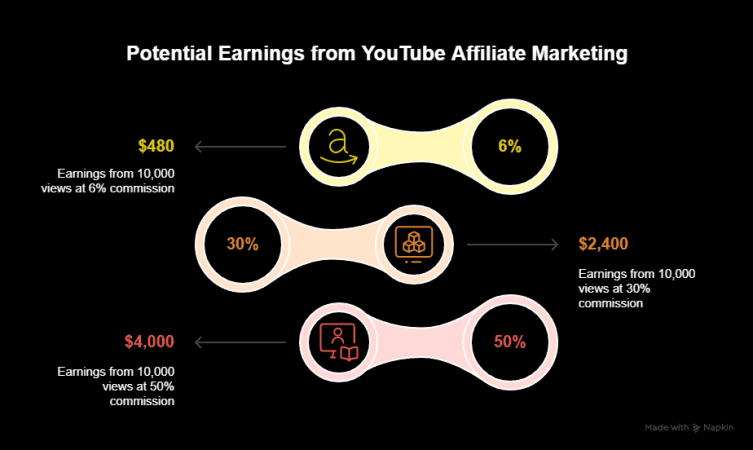
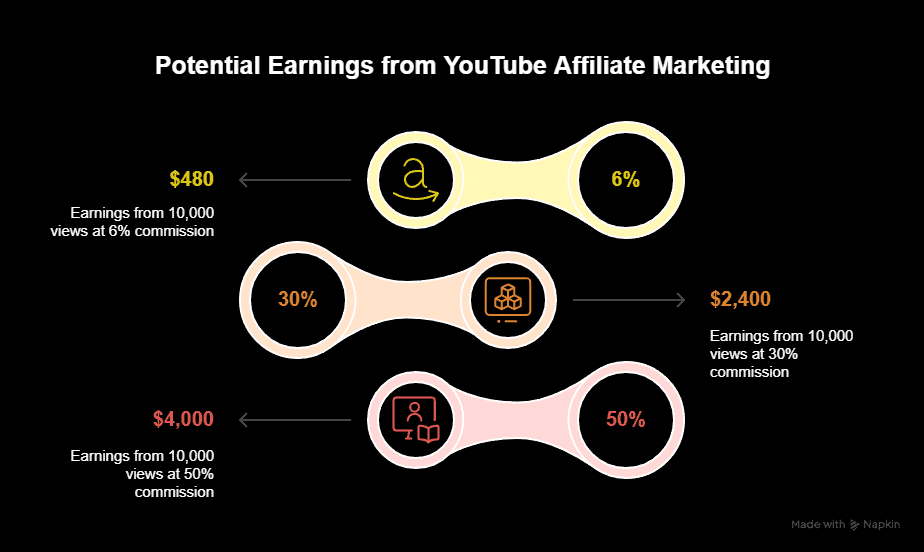
A small but highly engaged audience in a specific niche can be far more profitable than a huge, general audience. Commission rates can range from a 1%-20% with large retailers like Amazon Associates and upwards of 30% for digital products, software (SaaS), and online courses.
Imagine you promote an $80 product with a 6% commission.
Views: 10,000
Conversion Rate (1% of viewers buy): 100 sales
Total Sales Value: $8,000
Your Commission (at 6%): $480
While this is a simplified example, it illustrates the power of affiliate marketing. Now, imagine if that video gains 50,000 or 100,000 views over its lifetime, or if you’re promoting a product with a higher commission. This can create a substantial and consistent monthly income stream.
Getting Started with YouTube Affiliate Marketing
While the process is straightforward, building a successful and profitable channel requires a thoughtful approach from the very beginning. Here’s how to set yourself up for success.

What Types of Videos Generate Affiliate Revenue?
While you can add affiliate links to any type of video, some formats consistently perform better because they speak directly to what viewers are looking for when they are ready to buy. Focusing on these proven styles makes a big difference in how many commissions you earn.
Product review videos are the classic affiliate format. People actively search for reviews before they buy, which means these videos attract viewers with strong purchase intent. A clear and honest review where you demonstrate the product, explain its features, and weigh the pros and cons builds trust quickly. Whether it is a new camera, a piece of software, or a kitchen gadget, sharing your firsthand experience helps your audience decide with confidence.
Tutorials and how-to videos are just as powerful. By teaching your audience how to solve a problem or achieve a goal using specific products, you naturally introduce your affiliate recommendations. A video on how to bake the perfect sourdough loaf, for example, can highlight the stand mixer, proving basket, and flour you use. Viewers see the products in action, which makes them far more convincing than a simple mention.
Another highly effective format is the “best of” or comparison video. These position you as the expert by comparing several products in the same category, such as “The 5 Best Running Shoes for Beginners” or “Nespresso vs Keurig.” You do the research for your audience, saving them time and effort, while helping them make an informed choice. These videos often reach people at the final stage of their buying journey, which makes them ideal for conversions.
Finally, unboxing videos capture the excitement of a new purchase. They give viewers a first look at the product, the packaging, and everything inside. Sharing your initial impressions feels authentic and spontaneous, which makes it engaging. As you walk through the unboxing, providing an affiliate link gives viewers the chance to join in on that new product experience themselves.
Tips to Create Great YouTube Affiliate Marketing Videos
In a crowded content space, “good enough” is not enough. To convert viewers into buyers, your videos need to grab attention, build trust, and deliver real value. Talking about a product on its own rarely works. You need to create a compelling viewing experience. These tips will help your affiliate videos stand out.
Start by planning your video with a script. Hitting record and rambling is a sure way to lose viewers. A well-structured script or detailed outline keeps your message clear and focused. Plan your key talking points, decide when to introduce the product, and make sure you know exactly how and when to deliver your call-to-action. This preparation keeps your video from dragging on, helps with audience retention, and signals to the YouTube algorithm that your content is worth promoting.
Next, know the product inside and out. Only recommend what you have actually used and believe in. Your credibility depends on it. Viewers can tell when you are speaking from real experience. Being able to explain specific features, benefits, and even potential drawbacks makes your recommendation authentic. That authenticity builds trust and is what convinces people to buy.
Bring genuine enthusiasm to every video. If you sound bored, your audience will feel bored. You do not need to be over-the-top, but let your passion for the subject show. An authentic, engaged tone makes your content more persuasive and enjoyable to watch. Remember, people are more likely to buy from creators they like and trust.
Integrate the product naturally into your content. The worst mistake is making the video feel like a drawn-out commercial. The product should be part of the story you are telling. In a review, it might be the focus. In a tutorial, it should appear as a tool that helps achieve the result. Always frame the product in terms of how it solves a problem or adds value.
Finally, keep things visually interesting. A single static shot can quickly lose viewers. Use B-roll to cut away to close-ups of the product, footage of it in action, or supporting visuals. Add on-screen text and graphics to emphasize key features, prices, or takeaways. Even small changes in camera angle can make your video look more dynamic and professional.
Where Can You Put Affiliate Links on YouTube?
How to Get Traffic to YouTube Affiliate Marketing Videos?
Creating a great video is only half the battle. The other half is getting people to watch it. Consistent traffic is the key to clicks and commissions, and success on YouTube depends on discoverability, engagement, and smart promotion. These are the most effective strategies for growing your audience.
Start with YouTube SEO. YouTube is the second-largest search engine in the world, which means optimizing for search is essential if you want long-term, passive traffic. Begin with keyword research before you even film. Use the YouTube search bar’s autocomplete or tools like VidIQ to see what your audience is looking for. Place your main keyword at the start of your title, keep it under 60 characters, and make it compelling by asking a question or highlighting a clear benefit. Your description matters just as much. Write a few paragraphs that naturally include both primary and secondary keywords, and always place your most important affiliate link right at the top.
Thumbnails are even more important than titles. They are the first thing people see and often the deciding factor in whether someone clicks. Aim for bright, high-contrast colors, bold and readable text, and a sharp, clear image. Showing a human face with a strong emotion such as excitement, surprise, or curiosity can dramatically increase click-through rates. Keep your style consistent so subscribers instantly recognize your content in their feeds.
YouTube Shorts are another powerful discovery tool. A single 60-second Short can introduce your channel to thousands of new viewers. Use Shorts as teasers for your main videos, showing a standout tip or moment that encourages viewers to watch the full version. Shorts also work well for quick reviews or single-product highlights. Always add your affiliate link in a pinned comment and mention it in the video itself. If you are part of YouTube’s shopping affiliate program, you can tag products directly for even greater impact.
Promotion should not stop at YouTube. Share your videos across your other social and video channels. Tailor your posts to each platform by using clips, graphics, or quotes that will draw people to the full video. Every social channel is an opportunity to drive more traffic back to your YouTube content.
Finally, focus on building a community and driving engagement. The YouTube algorithm favors videos and channels that keep people involved. End your videos with a question that sparks discussion in the comments, and ask viewers to like and subscribe if they found value in your content. Make it a habit to reply to comments so your audience knows you appreciate their input. And most importantly, stay consistent. Uploading on a regular schedule trains your audience to expect new content and signals to YouTube that your channel is active and worth promoting.
Collaborate with Other Influencers
One of the fastest ways to grow your channel and reach more viewers is through collaboration. Partnering with another creator in your niche lets you tap into their audience, instantly putting your content and your affiliate recommendations in front of hundreds or even thousands of potential new subscribers.
This works because it is built on borrowed trust. When an audience already knows, likes, and trusts a creator, an introduction from them acts as powerful social proof. Their viewers are much more likely to check out your channel, take your recommendations seriously, and stick around for more.
To make collaborations work, start by finding the right fit. Look for creators who are at a similar stage of growth and whose content complements your own. For example, a tech reviewer might partner with a channel focused on work-from-home setups. The overlap is natural and both audiences benefit.
Next, propose a win-win idea. Avoid asking for a simple shoutout. Instead, suggest something concrete that delivers value to both sets of viewers, such as a joint review, a comparison video, or a guest appearance. These types of collaborations feel natural and engaging while offering real value.
Finally, make your pitch personal. When reaching out, show that you have taken the time to watch their content. Mention a specific video you enjoyed and explain why you believe a collaboration would be a good fit for their audience. This thoughtful, personalized approach shows respect and greatly increases your chances of getting a positive response.
Tracking Affiliate Links and Conversions To Sales
Building a successful affiliate marketing business requires more than just adding links and hoping for the best. You need to track performance to see what is working, what is not, and where to focus your energy. Monitoring your links shows you exactly which videos generate the most clicks and sales, allowing you to double down on the content that resonates with your audience and drives revenue.
The first place to start is your affiliate dashboard. Every affiliate program provides one, and it should be your main source of truth for tracking clicks, orders, sales, and commissions. Make it a habit to check this regularly. Many platforms also let you generate unique tracking IDs for different videos, giving you more detailed insights.
Creating unique tracking IDs, often called SubIDs or Custom IDs, is one of the most powerful methods for YouTubers. Instead of using the same generic link everywhere, assign a unique ID to each video. For example, you might create an ID like “video-saas-notify-walkthrough” for a video showing a walkthrough of FanCircles Notification Passes. When you review your reports, you can see exactly how many clicks and sales came from that one video. This level of detail tells you precisely which content is driving income.
Using link shorteners is another smart approach. Affiliate links can look long and cluttered, which may put viewers off. Services like Bitly create cleaner, more professional-looking links and also provide basic analytics, showing how many clicks each link receives. This gives you a useful secondary data source to compare against your affiliate dashboard.
Finally, use YouTube Analytics to put everything into context. While it will not show affiliate sales directly, it gives you valuable data about video performance. If your affiliate dashboard shows a spike in sales, check your YouTube Analytics for the same period. You may see that a particular video mentioning that product had a surge in views. By correlating these two data sources, you can better understand how your videos are influencing affiliate income.
Conclusion on Affiliate Marketing on YouTube
Success in affiliate marketing does not come from gaming the algorithm or chasing quick wins. It comes from building a real, long-term business based on trust and value. That means choosing a niche you are passionate about, creating high-quality content that genuinely helps your audience, and always being transparent in how you operate.
Think of yourself not as a salesperson but as a trusted guide. Your role is to help viewers make informed decisions by sharing your authentic experiences and expertise. When you consistently show up, deliver value, and nurture a community, your channel grows from a simple hobby into a sustainable business. Affiliate commissions then become the natural outcome of the trust you have built and the problems you have solved. Put your audience first, and the success will follow.
No. You can start affiliate marketing with zero subscribers. Most affiliate programs, including high-paying SaaS platforms, have no minimum subscriber requirements. Your ability to earn is based on the quality of your content and the trust you build with your audience, not your subscriber count. This is a key difference from the YouTube Partner Program (YPP), which requires a minimum of 500 or 1,000 subscribers to monetize through ads.
Absolutely. Affiliate marketing is one of the best ways to monetize your channel before you qualify for the YPP. Your affiliate income is paid by the companies whose products you promote, completely independent of YouTube’s ad revenue system.
Yes, it is effectively free to begin. Creating a YouTube channel costs nothing, and joining reputable affiliate programs and networks is also free. Your primary initial investment is your time and whatever equipment you already own, like your smartphone.
Transparency is crucial for maintaining audience trust and complying with FTC guidelines. You must disclose your affiliate relationships clearly and conspicuously.
In the Video Description: Place a simple disclosure at the very top of your description, before any links. Example: “Disclosure: The links below are affiliate links. If you make a purchase, I may earn a commission at no extra cost to you.”
Verbally in the Video: It is a best practice to also mention it in the video itself. A simple, “I’ve put links to all the software I’m using in the description, and just so you know, those are affiliate links,” works perfectly.
For high-ticket SaaS (Software as a Service) products, educational content is king. Viewers need to understand the value and return on investment. The most effective formats are:
Deep-Dive Tutorials: Showing exactly how to use the software to solve a specific problem.
Case Studies: Presenting a real-world example of how the software helped you or your business achieve a result.
Comparison Videos: Honestly comparing two major platforms to help viewers make an informed decision.
The key is to use unique tracking IDs (often called SubIDs) for each video. Within your affiliate program’s dashboard (like PartnerStack for many SaaS companies), you can generate a specific tracking ID for each video. For example, a link for a NordVPN review could have the ID “nordvpnreview2025”. This allows you to filter your sales reports and see exactly which video generated the click and the commission.
You are paid directly by the affiliate program or network, not by YouTube. Each program has its own terms, but generally, the process is:
You reach a payment threshold (e.g., $50 or $100 in earned commissions).
Your commissions go through a “locking” or “validation” period (typically 30-60 days) to account for customer refunds.
You are then paid, usually via direct deposit (ACH) or PayPal.
For earning potential, yes. High-value SaaS products often have much higher commission rates than physical goods. More importantly, many SaaS programs, like those for GoHighLevel, Semrush or ConvertKit, offer recurring commissions. This means you get paid every single month that the customer you referred stays subscribed, creating a powerful, compounding passive income stream.
Micro-influencers (typically 10,000-100,000 subscribers) are highly effective because they combine reach with trust. Their audience sees them as relatable experts in a specific niche. This leads to:
Higher Engagement: Their recommendations feel more authentic, leading to higher click-through and conversion rates.
Niche Authority: They are seen as the go-to source for advice on specific topics, so their audience trusts their software recommendations implicitly.
There are two equally important spots:
“Above the fold” in your video description: This means in the first 1-2 lines, before a viewer has to click “Show more.”
In a pinned comment: This comment stays at the top of the comment section and is highly visible to engaged viewers.
Using both locations for your primary call-to-action is the most effective strategy.


