
Connected TV Attribution: The Problem Brands Are Underestimating

Connected TV attribution breaks down because the conversion layer has not evolved with how TV is actually watched. As more ad spend shifts into lean-back environments where clicks do not exist and QR codes demand too much intent, brands are left with exposure but no reliable signal of action.
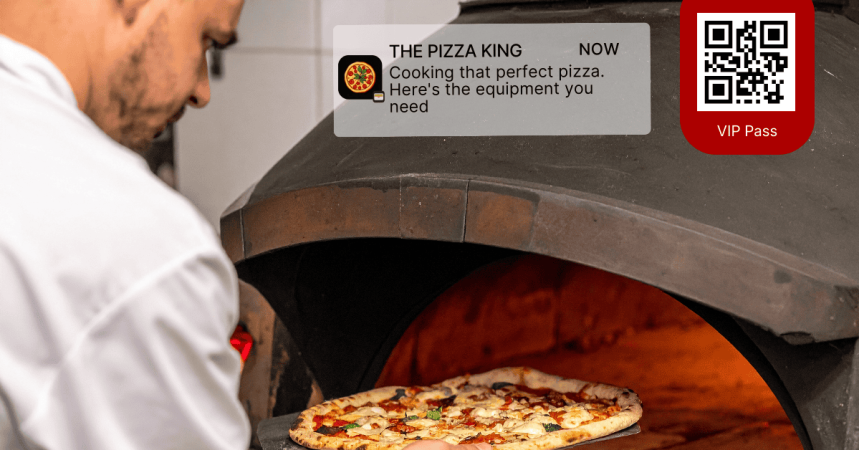
Connected TV QR code showing a VIP pass while a food creator cooks pizza on screen

Table of Contents

Connected TV is now being treated as a performance channel, but the way attribution is approached hasn’t caught up with how TV is actually watched. As more brand spend shifts into connected TV ad environments, the gap between exposure and measurable action is becoming increasingly relevant. This isn’t a reporting problem. It’s a conversion-layer problem.

Unlike mobile or desktop, there is no such thing as a natural click on TV. The only realistic interaction available during TV viewing is a QR code. And yet most connected TV campaigns still rely on QR codes that assume the viewer is in purchase mode. That is where attribution starts to break down.

Connected TV Is No Longer Simply a Top-of-Funnel Channel

Connected TV ads are no longer treated as purely top-of-funnel tools. They are expected to perform alongside paid search, social media, and affiliate marketing channels, with results that can be measured and defended.

YouTube is often where brands first notice this issue, because YouTube TV attribution breaks down so visibly when viewers move from mobile to television screens.

That expectation is reasonable, given that most modern advertising is measurable. The problem is that the interaction model of TV ads hasn’t kept up. While ad buying and targeting have modernised, TV conversion tracking is still trying to force viewers into behaviors that make sense on the web, not on a television screen.

Why QR Code Attribution Fails on TV

QR codes are positioned as the solution to TV attribution, but in most cases, they aren’t used in the way viewers watch TV. The same disconnect shows up across the wider influencer marketing best practices landscape, where the standard advice still centers on trackable links and discount codes that do not function when the audience is watching on a television. A QR code shown on a TV screen is usually asking too much, at the wrong moment. It’s often asking for a purchase intent when the viewer is laid back and relaxed.

TV viewing is a “lean-back” experience. Asking them to pull out a phone, open a camera, scan a code, and then complete a purchase introduces a level of friction that doesn’t match the context.

As a result, scan-through rates are usually low, generally sitting in single-digit territory. That doesn’t mean the campaign failed. It means the call to action didn’t fit the moment.

What Actually Happens When Someone Sees a QR Code on TV

Most viewers don’t scan a QR code while watching TV, even if they’re interested. They notice the brand. They register the offer that’s on the table, but they don’t want to act and purchase. They might search for the brand later, of course, but that means another cost per click and no way to attribute the missing conversion layer that visitors to an earlier watched TV ad miss. 

This is where connected TV advertising loses credit for the demand it creates, and with it goes its measurability.

The Attribution Gap Hidden Inside Connected TV Reports

On the surface, connected TV advertising reports look healthy. Impressions are delivered, and targets are met. What’s missing is a reliable link between exposure and outcome.

Because QR codes are often too much of an ask, or a “hard sell,” they get ignored, and with it, the conversion signal disappears. Demand generated by TV ads may show up elsewhere, but with a missing conversion layer between exposure and future action, there’s no reliable way to measure it.

It’s quite plausible that brands end up paying twice for the same customer. Once to create the demand through TV, and again to capture it through paid search ads.

Why This Becomes a Financial Problem

When connected TV ad performance can’t be clearly demonstrated, confidence drops, and with it, the potential budget is directed to other areas, even though the reality is that improving the scan-through rate could yield extremely good results. This is especially true when CTV budgets are reviewed alongside measurable attribution channels.

Finance teams aren’t asking for perfect attribution, but they do need a defensible signal. Without it, connected TV ad budgets become vulnerable regardless of how effective they might actually be.

Why Better Reporting Doesn’t Fix This

When connected TV attribution becomes unclear, the instinct is often to look for better reporting mediums, but reporting tools can only work with the signals they’re given if they’re working optimally. If no interaction is captured at the moment of exposure, no amount of reporting will fill that gap later. The issue isn’t visibility. It’s that the wrong CTA is being used in the first place. It also means the wrong influencer marketing KPIs are being reported, because metrics designed for clickable platforms systematically undervalue every campaign where the audience is watching on a television.

What a TV-Safe Conversion Signal Needs to Look Like

A conversion that works on TV has to take into account how TV is watched. It can’t assume buying intent in the moment. It needs to support a “save now, act later” behavior.

That connection with the viewer also needs to be persistent to build on that first interaction. A missed QR scan is often where the problem starts. So the solution has to begin at what the QR code scan does. A purchase intent is often much too strong an ask.

But what if, in that moment, instead of a hard sale being the ask, a soft CTA that benefits the viewer who scans is onboarded to the brand’s VIP Club, membership club, or loyalty program could replace that? A no-app-required, 1-click connection that persists. This is what The PushPass platform delivers.

Where Brands Go Next

The problem with connected TV ad campaigns isn’t the content, it’s the conversion metric. Solving this captures intent while the viewer is watching, without forcing an action that doesn’t belong during that moment. Brands that adapt here stop trying to make TV behave like the web and instead build conversion funnels that reflect how TV is watched. As a result, many teams exploring connected TV attribution solutions for brands that are designed specifically for TV viewing behavior win. Not because they use technology for the sake of it, but because they need a conversion that fits the moment. When that exists, attribution becomes clearer, confidence improves, and connected TV becomes much easier to justify as a performance channel. The full picture of why this matters and what replaces probabilistic modeling is covered in our guide to CTV attribution, which explains how wallet passes create a deterministic measurement path from TV screen to sale.

A 15-minute call. Your brand on your lock screen before it ends.

Related Posts
Couple watching TV at home in a relaxed setting, illustrating how TV viewing creates passive attention rather than immediate purchase intent
The Missing Conversion Layer in TV and Creator-Led Campaigns
The Missing Conversion Layer in TV and Creator-Led Campaigns explains why attribution breaks down when brands treat TV viewers like website users. As TV becomes a performance channel, purchase-intent CTAs and one-off interactions fail to capture intent, leaving demand uncredited and hard to measure.
People watching YouTube on a TV while using their phones, showing why influencer attribution breaks down in a lean-back viewing environment
Why Influencer Attribution Breaks on YouTube TV
YouTube attribution solutions for brands are becoming essential as more viewers watch YouTube on TV, where clicks and hard calls to action simply don’t fit the viewing context. This article explains why influencer attribution breaks down on YouTube TV and why capturing a softer, TV-safe signal of intent is critical for accurate measurement.
Illustration highlighting how TV viewing is forcing influencer campaign design to change from click based actions to QR code engagement
How TV Viewing Is Forcing a Rethink of Influencer Campaign Design
Influencer campaign design has been built around clicks, but TV viewing removes that interaction entirely. As YouTube increasingly behaves like a television channel, agencies and brands must rethink how audiences can act in the moment. This article explains why QR codes become essential on TV and how campaign design needs to adapt to match viewer behaviour.

Try PushPass

Try out PushPass today, scan the QR code, and add the FanCircles brand pass to your wallet instantly.