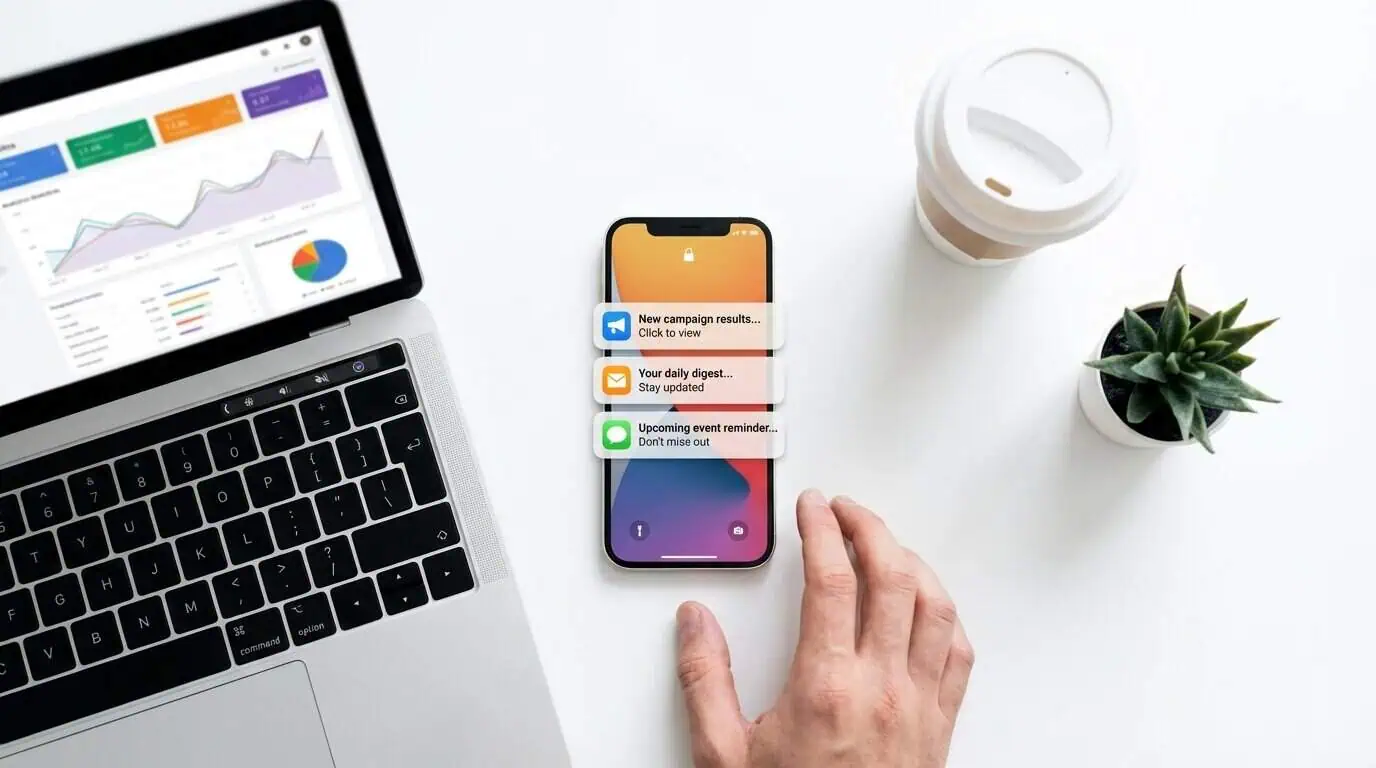

Push notifications are one of the most effective ways to reach people. That’s not controversial. They’re immediate, visible, and they show up in a place people already look dozens of times a day.
For years, the default has been that if you want to send push notifications, you need an app. That model works extremely well for certain types of businesses. It just doesn’t work for creators, or for the majority of brands operating outside the very top end of the market.
The issue isn’t whether app-based push notifications work. They clearly do. The issue is who they actually make sense for.
App-Based Push Notifications Are a Scale Game
Look at the brands that successfully use app-based push notifications.
Starbucks. Nike. Uber. Deliveroo. Banks. Credit card companies. Social platforms. All huge companies with big budgets to spend on building and maintaining apps.
All of these businesses share a few things in common. They have millions of users. They have daily or near-daily utility. And they can justify the cost of building, maintaining, and promoting an app because the app itself is central to the business.
For these companies, push notifications are an extension of something people already use constantly.
Creators and most brands can’t justify the cost of operating native apps, and they often don’t work simply because they’re overkill when all you need to do is send push notifications without an app that delivers the user to any destination.
The App Is the Barrier, Not the Notification
For a creator, a single-product brand, or even a well-known mid-sized business, the question is never “do push notifications work?” The question is “why would someone install our app?”
That’s a much harder question to answer.
Apps come with friction. They require a download. They take up space. Unless the app provides clear, repeatable value, most people either don’t install it or remove it quickly.
Push notifications are extremely valuable, but the app required to enable them rarely is.
Creators and Most Brands Don’t Have an App-Shaped Problem
Cost Matters More Than People Admit
There’s also an economic reality that’s often glossed over.
Building and maintaining an app isn’t just expensive upfront. It’s expensive forever. Operating system updates, bug fixes, security, store compliance, and ongoing development all add up.
For the biggest brands, this cost is justified because the app directly supports revenue and operations. For creators and smaller brands, it rarely does.
This is why app-based push notifications quietly become a non-starter for most of the market. Not because teams don’t understand their value, but because the economics don’t line up.
Usage Patterns Favor Platforms, Not Individuals
Apps work best when people need them frequently and on the move.
Creators and content-led brands don’t need to be opened every day. Their relationship with their audience is episodic. It’s about moments, releases, updates, and events.
That kind of relationship doesn’t work well in an app-first model. The app sits idle most of the time, and when it’s not being used, it gets deleted.
Once the app is gone, the push notification channel disappears with it.
The Wrong Conclusion Gets Drawn
Because app-based push notifications work so well for large brands, it’s easy to assume they should work for everyone.
When they don’t, the conclusion is often that push notifications aren’t practical outside of enterprise businesses. But that’s the wrong conclusion. The problem isn’t push notifications. It’s the assumption that they must be tied to an app.
Once you separate the notification functionality from the app model, the picture changes completely.
What This Means Going Forward
Push notifications are one of the most powerful ways to reach an audience. That hasn’t changed.
For creators and most brands, the question is not whether push notifications make sense. It’s whether the delivery mechanism matches how their audience actually behaves.
App-based push notifications will continue to work very well for the biggest brands. For everyone else, the future lies in approaches that remove the app entirely and focus on fitting communication to real-world behavior.
That shift is what makes push notification marketing usable beyond enterprise scale.
Want to know more? PushPass might be the solution. See how our push notification platform reaches every lock screen with no app.
A 15-minute call. Your brand on your lock screen before it ends.