What Are Mobile Push Notifications?
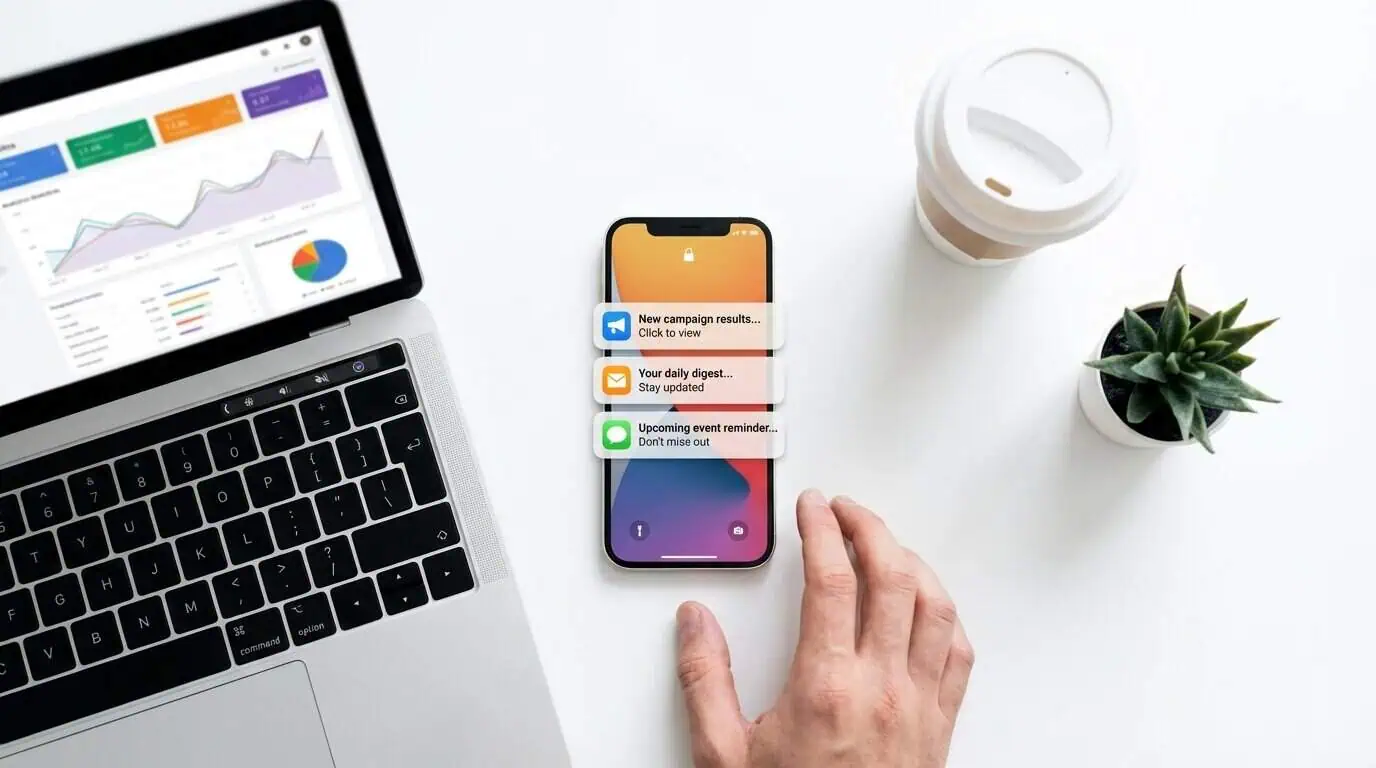
Mobile push notifications are short, timely messages sent directly to someone’s phone, tablet, or smartwatch. They appear on the lock screen, in the notification tray, or as a banner while another app is open. Their job is simple: get seen quickly, without relying on feeds or inboxes.
Why Use Mobile Push Notifications
Mobile push notifications matter because they reach people where attention already is. Unlike email, they don’t compete with inbox overload. When someone opts in, a notification shows up directly on their device.
Mobile push notifications are generally triggered by installed apps, like a YouTube notification for a new upload or a music app telling you a track is out now.
Push notifications for web, work through a browser, opt-in, and are generally simply annoying – so few switch them on other than for very important stuff, like email notifications or breaking news.
A Quick History of Push Notifications
Push notifications first appeared in 2009 when Apple introduced them to iOS, followed shortly by Android.
Over the last decade, Apple and Google have expanded how notifications work. Push notifications are no longer limited to standalone apps. Built-in wallet systems now allow notifications to be sent without requiring users to download an app.
This shift is particularly helpful for influencers who don’t want to invest in developing a full app but still want the benefits of high engagement. Mobile push notifications do just that.

How Mobile Push Notifications Work
With our platform push notifications without an app, brands and creators can send push notifications directly to their audience’s lock screen through Apple Wallet and Google Wallet, with no app required. The flow is the same whether you’re using mobile app push notifications or push notifications for web and mobile – the difference lies in where the subscription happens. With an app, opt-in happens within the app. With wallet-based systems, it’s often through a sign-up page that adds a pass to their wallet. The difference is not the notification itself, but how easy it is for someone to opt in.
Why Push Notifications Matter for Influencers and Brands
For a brand or influencer, mobile push notifications go beyond instant communication. It’s about maintaining momentum. Posts can get lost in a busy feed, but a push notification goes straight to the lock screen of everyone who has your pass.
Imagine announcing a pop-up merch drop. If you email your list, you might get a 20 to 40% open rate, so most people never open it (the promotions tab is where good intentions go to die). Mailchimp’s 2023 benchmarks ↗ put the average at about 36%. Wallet-based push notifications arrive on the lock screen straight away and feel more personal, so far more people see them in time. That’s not just more eyes on your content – that’s more immediate action.
Six Advantages of Using Push Notifications
- High Visibility. Email competes in a crowded inbox, while a wallet pass notification reaches the lock screen of every phone that has the pass. That’s a powerful advantage for time-sensitive updates.
- Speed – A notification can reach someone’s screen in seconds, perfect for “going live now” alerts or surprise content drops.
- Direct Fan Connection – With mobile app push notifications, your app stays front-of-mind. With push notifications for web and mobile, you bypass app stores entirely.
- Personalization – Many systems let you segment by city, country, or interests so you can tailor updates for specific audiences.
- Multi-Device Reach – They work across phones, tablets, and even smartwatches, meaning you’re never far from your audience.
- Direct Delivery – Push notifications go straight to the lock screen of everyone who opted in, with no guesswork.

Industries That Use Push Notifications
E-commerce brands use mobile app push notifications to announce flash sales. Event organizers send reminders about concerts and sports games. News outlets break stories in real time.
Influencers can borrow these same tactics to promote new content drops, exclusive discount codes, or even meet-and-greet events. If you’re streaming live, a push can pull viewers in before your opening scene. If you’re a fitness creator, a push might announce a limited sign-up for your next challenge. Creators are increasingly using the same mechanics to promote content, drops, and live moments, and a wallet pass makes it mobile marketing without an app.
Best Practices When Using Push Notifications
Push notifications should be short, clear, and timely. Lead with the most important detail, then make it actionable – “New video is live, watch now” works better than “We’ve uploaded something.” For mobile app push notifications, keep in mind that your audience may also be using the app for other features, so avoid overwhelming them with too many alerts.
If you’re using push notifications for web and mobile without an app, be especially mindful about timing. These messages often feel even more personal since they aren’t tied to an app’s feed.
What Not to Do
Don’t send notifications just for the sake of sending something. Each push should have a clear reason. Avoid vague titles that don’t explain why it matters to the user. And remember, the meaning of mobile push notifications includes delivering value. If your audience learns to expect fluff, they’ll stop opening your messages.
Making Push Notifications Part of a Bigger Plan
Push notifications work best when they’re part of a wider communication mix, not the only channel. You might use social media for buzz, email for detailed updates, and push for the “act now” moments. Influencers who combine mobile app push notifications mobile push notifications often see the highest engagement because they’re reaching their audience in multiple ways.
Bringing It All Together - With or Without an App
Push notifications can be delivered in different ways. Large brands often rely on apps because they already have the scale to justify them. Most creators don’t.
Wallet-based notification systems enable push notifications without requiring people to install an app. A simple opt-in creates a direct connection that lives on the device, not inside a feed or inbox.
This shift is why a push notification platform with no app makes sense for creators.
A 15-minute call. Your brand on your lock screen before it ends.