
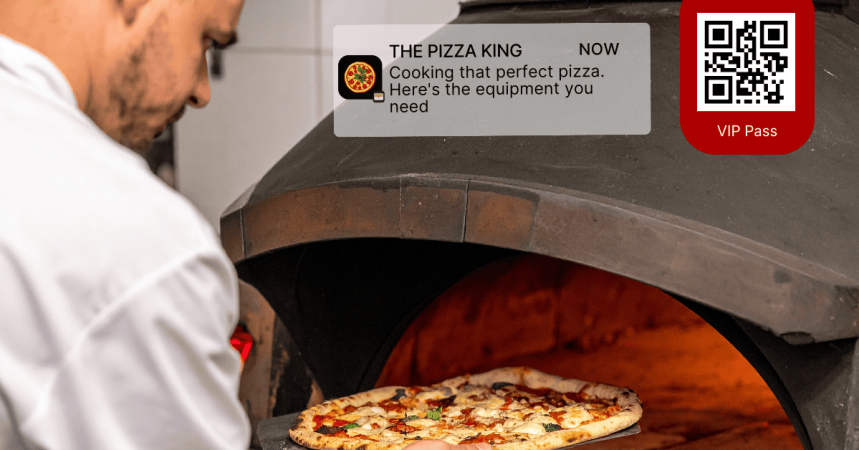
Connected TV is now being treated as a performance channel, but the way attribution is approached hasn’t caught up with how TV is actually watched. You can see this with QR codes that simply land on a website or form. The gap between exposure and measurable action is becoming relevant.
Unlike mobile or desktop, there is no way to a link on a TV in you rliving room. The only realistic interaction is a QR code, and most connected TV ad campaigns still rely on QR codes that assume the viewer is in purchase mode. They aren’t.
Connected TV Is No Longer Simply a Top-of-Funnel Channel
Connected TV ads are no longer treated as top-of-funnel. They are need to perform alongside paid search, social media, and affiliate marketing channels, with results that can be attributed.
YouTube is often where brands first notice this issue, because YouTube TV attribution breaks down so visibly when viewers move from mobile to television screens. The link in the description isn’t available, and the QR code isn’t being optimized.
TV conversion tracking is still trying to force viewers into behaviors that make sense on the web, not on a television screen.
Why QR Code Attribution Fails on TV
QR codes are the solution to TV attribution, but in most cases, they aren’t optimised for the way viewers watch TV. A QR code shown on a TV screen is usually asking too much, at the wrong moment. It’s often asking for a purchase intent when the viewer is laid back and relaxed.
TV viewing is a “lean-back” experience. Asking them to pull out a phone, open a camera, scan a code, and then complete a purchase doesn’t match the context of the moment.
As a result, scan-through rates are low. And the drop-off after QR codes with the purchase intent is even greater. That doesn’t mean the campaign failed. It means the call to action didn’t fit.
What Actually Happens When Someone Sees a QR Code on TV
Most viewers don’t scan a QR code while watching TV, even if they’re interested. They notice the brand. They register the offer that’s on the table, but they don’t want to act and purchase. They might search for the brand later, of course, but that means another cost per click and no way to credit the TV ad they watched earlier.
This is where TV advertising loses credit for the demand it creates, and with it goes its measurability.
The Attribution Gap Hidden Inside Connected TV Reports
Because QR codes are often too much of an ask, or a “hard sell,” they get ignored, and with it, the conversion signal disappears. Demand generated by TV ads may show up elsewhere, but with a missing conversion layer between exposure and future action, there’s no reliable way to measure it.
It’s quite plausible that brands end up paying twice for the same customer. Once to create the demand through TV, and again to capture it through paid search ads.
Why This Becomes a Financial Problem
When connected TV ad performance can’t be clearly demonstrated, confidence drops, and with it, the potential budget is directed to other areas, even though the reality is that improving the scan-through rate could yield extremely good results.
Marketing teams aren’t asking for perfect attribution, but they do need a defensible signal. Without it, connected TV ad budgets become vulnerable regardless of how effective they might actually be.
What a TV-Safe Conversion Signal Needs to Look Like
A conversion that works on TV has to take into account how TV is watched. It can’t assume buying intent in the moment. It needs to support a “save now, act later” behavior.
That connection with the viewer also needs to be persistent to build on that first interaction. A missed QR scan is often where the problem starts. So the solution has to begin at what the QR code scan does. A purchase intent is often much too strong an ask.
But what if, in that moment, the ask were a soft CTA that adds the viewer who scans to the brand’s VIP club, membership club or loyalty program? A no-app-required, one-tap connection that persists. This is what the PushPass platform delivers.


