
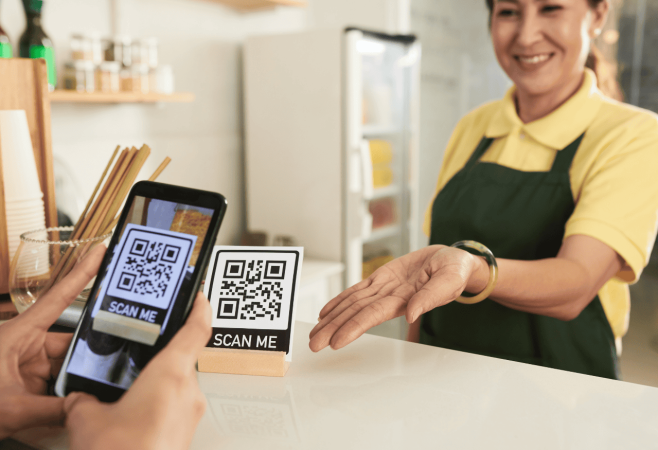
QR code scan rates rarely fall short for the reasons people like to argue about. It isn’t usually placement or awareness.
The real problem is simpler; it’s the call to action. That same dynamic explains why QR codes underperform on YouTube and TV when they are treated as conversion moments instead of low-pressure actions.
At this point the bottleneck isn’t execution, it’s psychology. Most QR codes still sit stubbornly at low scan rates. Soften the call to action and the same code captures far more people, because a low scan rate is what happens when the scan is treated as a commitment instead of an action.
Push a sale, and scans drop. Soften the ask and scans rise. More than any other variable, how much you demand at the point of scan determines whether a QR code gets ignored or consistently performs in the top tier.
The same pattern shows up everywhere QR codes are used, on packaging, events, checkout, hospitality, and even screen-based environments like YouTube and TV advertising viewed on the big screen.
What a High QR Code Scan Rate Signals
A QR code that reliably gets a high scan rate isn’t doing anything clever or promotional. It’s simply aligned with what the user already wants to do in that moment.
There’s no spike, no gimmick, no novelty effect. It works because it fits.
Look closely at QR codes that perform at that level and the pattern is always the same. They appear when the user has actually stopped. It’s immediately obvious what happens after the scan. The action feels safe and easy to undo. And there’s no attempt to turn the scan into a transaction.
Take even one of those away and the numbers slide fast. I’ve yet to see a genuine exception. People pause, think about it, and then move on. When all four are in place, scanning feels natural rather than something that needs weighing up.
Why Most QR Codes Fail Before They’re Even Scanned
Most underperforming QR codes fail because they turn the scan into a decision.
The moment you ask someone to buy, sign up, or commit, you force them to evaluate value, trust, and relevance on the spot. That pause is exactly where scan-through rates die.
Hard calls to action overload the moment. They ask the user to decide before they’ve been given any real reason to care. And this is where theory falls apart in packaging, checkout queues, events, hospitality, direct mail and physical spaces, places where people aren’t looking to decide anything.
In those contexts, hard CTAs behave like ads. And ads get filtered.
You can have perfect placement and perfect design, but once the QR code feels like a pitch, it’s ignored. The failure happens before the scan, not after it.

Why Soft Calls to Action Increase QR Code Click-Through Rates
Soft calls to action work because they lower the mental barrier to scanning. They don’t try to trigger a decision. They just make the scan feel safe.
Language like “Save for updates,” “Add for alerts,” or “Get notified” quietly changes what the QR code represents. It stops being a sales mechanism and starts behaving as both a communication tool and a digital loyalty card. The scan becomes an invitation rather than the much harsher call to action of a purchase. That action comes later.
You don’t need a dashboard to see this. QR codes with high asks simply don’t perform as well as the same ask within a link in description, while the viewer is in a different mode – more relaxed.
The most common mistake is trying to force a transactional moment rather than a connection moment.
A high scan rate is possible, but only if the ask matches the moment.
Action-Led QR Codes Outperform Sales-Led QR Codes
Placement Still Matters, But Only in Combination With the CTA
QR code placement matters, but not in isolation.
High-performing placements share one thing in common: they appear during moments of pause. Checkout counters, receipts, packaging, tickets, wristbands, tables, confirmation screens, and waiting areas all provide available attention.
In those moments, soft CTAs thrive. Hard CTAs still suppress scans, even in ideal placements, because they introduce unnecessary decision-making.
Placement amplifies whatever the call to action is doing. It doesn’t override it.
Context Beats Creative Once Scanability Is Solved
Once basic scanability is handled, creative execution stops being the main lever.
A simple QR code in the right context will outperform a beautifully branded one in the wrong context every time. Users decide whether to scan in a fraction of a second, based on situational fit rather than aesthetics.
Design enables scanning. Context and CTA decide whether it happens.
What Happens After the Scan Matters More Than the Scan Itself
Scan-through rate is an entry metric, not the end goal.
High-performing QR code programs are designed around what happens after the scan. They load quickly, deliver immediate value, and avoid forcing decisions. This leads to higher repeat scans, stronger engagement rates, and better long-term performance.
Hard CTAs followed by hard landing pages break trust fast. Soft CTAs followed by lightweight, persistent experiences build it.
This is why action-based QR strategies consistently outperform campaign-based ones over time.
The fastest way to increase QR code scan-through rates is to stop trying to convert at the point of scan.
Hard calls-to-action turn QR codes into ads, and ads get filtered. Soft calls-to-action turn QR codes into tools, and tools get used. When the scan is framed as a safe, reversible action rather than a sales decision, resistance drops and the same code captures far more people.
Measuring QR Code Performance Properly
Teams that’ve been burned by this before don’t optimize for scans alone.
They look at unique scans versus repeat scans, engagement over time, retention, and responsiveness to future messages. In many cases, a QR code with fewer initial scans but higher repeat engagement delivers more value than high-volume, low-trust deployments.
The scan is just the first signal that something is aligned.
Volume looks good in a report. Retention is harder to argue with.
The Structural Pattern Behind High QR Code Scan Rates
Consistent high scan-through rates don’t come from urgency, incentives, or clever wording. They come from reducing pressure at the point of scan.
The QR code appears when attention is available.
The call to action feels optional and safe.
The scan enables a low-risk action.
The relationship continues after the scan.
At that point, QR codes stop acting like campaigns and start acting like something you can actually rely on long term. And once that shift happens, high scan rates stop being exceptional and start becoming normal.
If you follow this line of thinking through, it leads to a fairly obvious conclusion. The QR code probably shouldn’t be treated as a data capture moment at all. If pressure reduces scans and softer actions increase them, then the QR codes that perform best are the ones that ask for almost nothing upfront. No forms, no discounts, no immediate commitment.
Just give people something genuinely useful they can keep, and then earn the right to talk to them later, not as a one-off click, but as a channel that sticks around and does something over time. Once you look at QR codes that way, the numbers start to make a lot more sense.
Which then raises a simple question. If the aim is to maximize scans and long-term value, why are so many QR codes still designed to extract data before the user has received anything at all? By using FanCircles PushPass lock screen notifications platform, you can deliver push notifications directly to your audience’s lock screen through Apple Wallet and Google Wallet, with no app required, with just a single tap on a QR code.
A 15-minute call. Your brand on your lock screen before it ends.


